The Power Was Never in the Word
Before the word there was meaning

“We often tell our students the future is in your hands, but I think the future is actually in your mouth” – Ocean Vuong (Vietnamese-American poet and essayist)
We are often told that words have power. We are also told that words create. There have been times when I’ve been ‘reprimanded’ for saying something ‘negative’.
It bugged me.
In the last year or so, I have become more conscious with my words—not out of fear that I will ‘manifest’ something I don’t desire, but because I realized how much our understanding of words is… problematic. It’s been an eye-opening experience.
It’s not the words that have power—it’s the meaning we inherited around the word- through family, culture, and experiences. That’s what is activated in our bodies. That is what we respond to.
When I coached C-suite teams abroad, the expectation was that all members spoke in English for the sake of the facilitators. It kind of annoyed me. Clearly, these teams communicate in their native languages when we weren’t around, and the expectation to do ‘deep work’ in an acquired language made absolutely no sense to me.
Think about it—you’re being asked to find meaning, make meaning, and connect deeply in the language you mostly use to get work done.
There was one activity in particular where we’d give them a set of words and ask them to assign value judgments and sort them accordingly. Then I’d challenge their choices because I know that everyone’s understanding of a word is not the same.
And every single time, there were words where multiple members had completely different interpretations.
I always say—forget the word. What matters our ability to come up with a shared meaning.
Humans are meaning-making species first—consciously or unconsciously. The impact a word has is dependent on the meaning assigned by the individual. Often, that meaning is inherited—through family, culture, community. But more importantly, it is our lived experience with the word that cements it in our psyche.
As a black woman in midlife, going through what I like to call the ‘second puberty,’ I believe we are challenged to revisit what words mean to us. It is an opportunity to question, challenge, and most importantly—reclaim our authority over meaning and ultimately its impact.
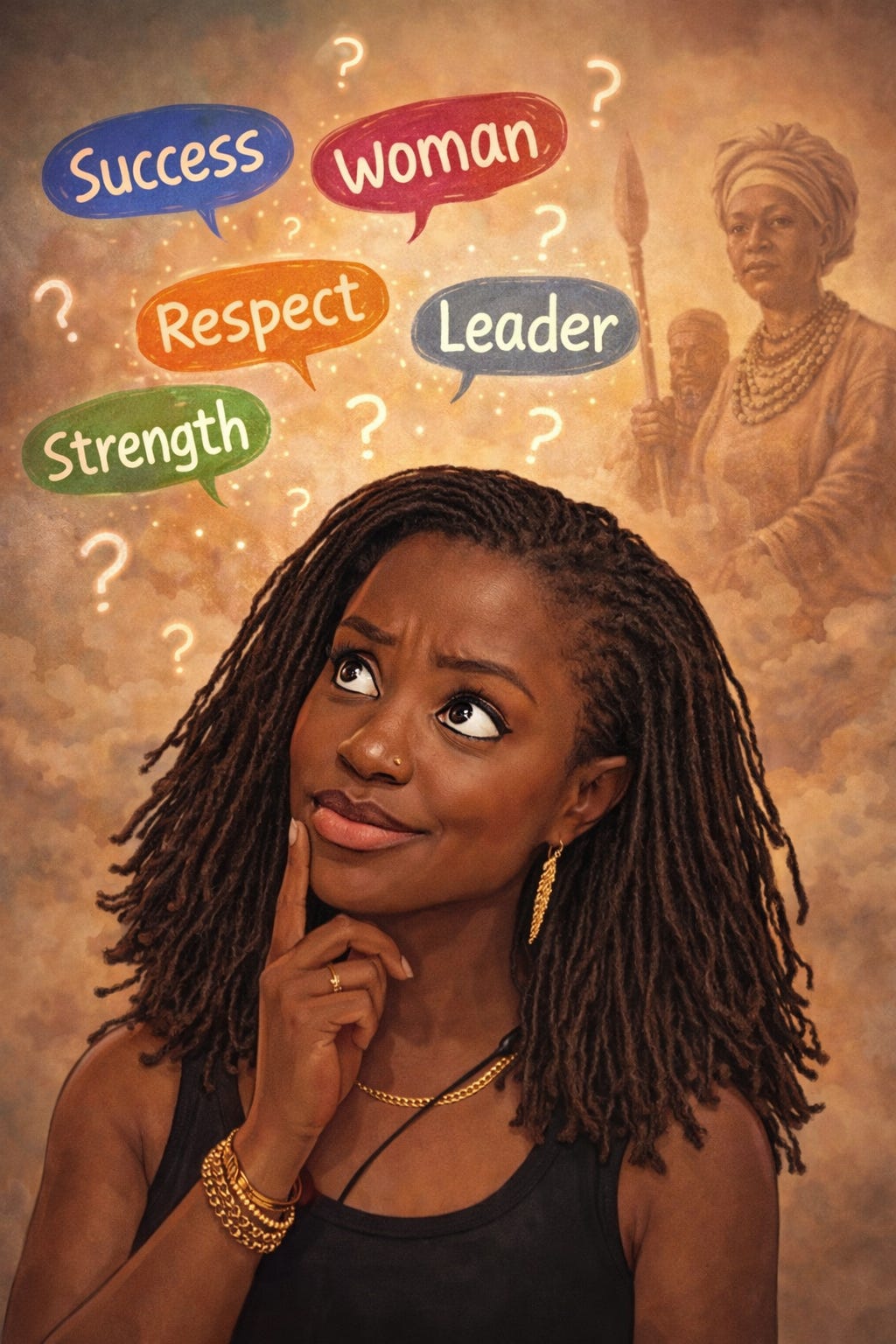
The discovery has been mind blowing - take for example the word ‘urgency’. It physically triggers me. I associate it with rushing and I HATE being rushed. The more you rush me - well lets just say the more like a donkey I behave. Its somatic.
The trouble is not with the word, or even its definition, its with how it translates in my body. This needs attention now → I must abandon myself and move fast. Its distortion. So I’ve created a new relationship with the word - choosing to understand it as a signal for priority, or a call for grounded decision making in the moment.
Bottom line:
The power of a word is in its meaning.
Better yet—the power of a word is in our relationship to that word.
The “second puberty” is the perfect opportunity to consciously re-establish a relationship with the words that we use. The dramaticness of the shift can reveal so much about the relationships we have in our lives- but more importantly the relationship we have with our self.
And because of that, we must challenge the relationship we have with words—because from that relationship, our evolved identity begins to emerge.
When we reclaim the meaning of our words, we become aligned.
And from that alignment—we create our futures.
In the season of the snowdrop (Galanthus), that internal heat that melts the snow around us is power.
The meaning—deeper yet, the relationship—we have with words is - power.